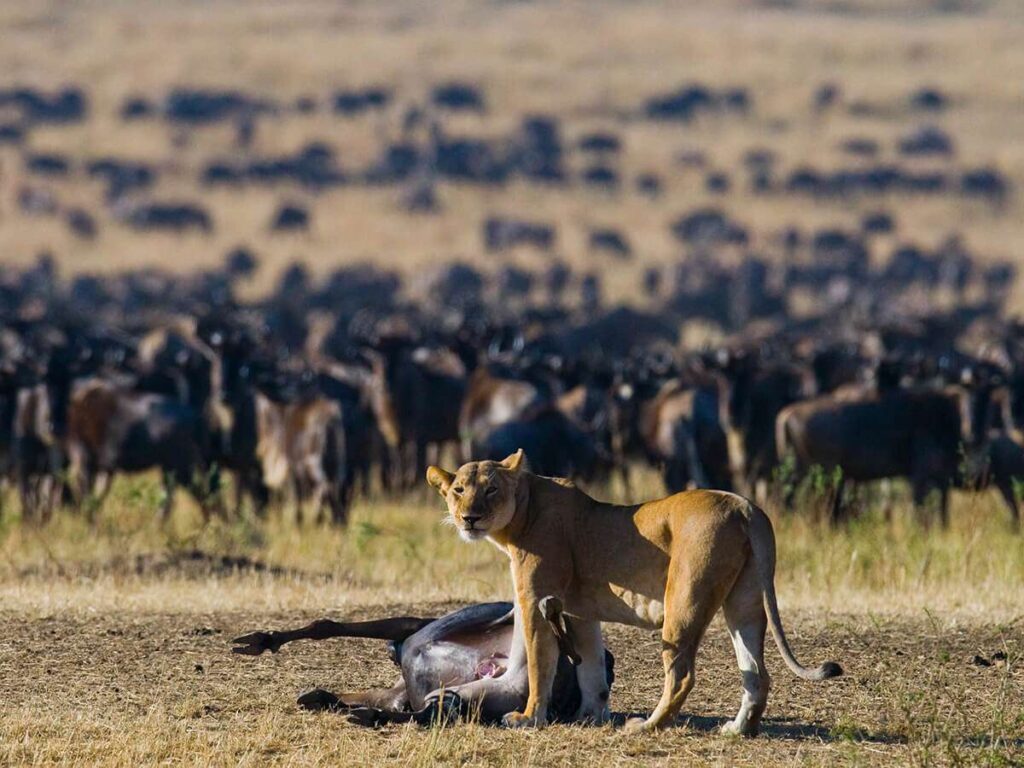
The Ultimate Guide to Witnessing the Great Migration in Tanzania.
Does experiencing Tanzania’s wildlife in all its glory thrill you? If yes, there’s no better time than the peak season of the Great Migration. Every year, there’s a spectacle you wouldn’t believe unless you saw it for yourself – the Great Migration of East Africa! Over a million wildebeest make a daring round trip between Tanzania and Kenya, side by side with thousands of gazelle and zebra. This sensational nature show draws animal lovers everywhere, eager to watch the thrilling river crossings or the heart-tugging moment when half a million wildebeest calves take their first wobbly steps.
But here’s a fun fact: the Great Migration is more than just a one-off extravaganza. It’s a continuous journey throughout the year, unveiling a fresh, exciting chapter each month. In this guide, we’ve got all the details lined up for you, including the best moments during the Great Migration and which parts of the majestic Serengeti offer the most fantastic view of the grand journey.
Where to See the Great Migration

Imagine the ultimate extravaganza of the wild – the grand spectacle of “The Great Wildebeest Migration.” Yes, it’s as epic as it sounds! From May to December each year, millions of wildebeest, zebra, and gazelle set off on an incredible journey. They clock miles between the stunning Serengeti National Park in Tanzania and the picturesque Maasai Mara in Kenya. And guess what? They’ve got some uninvited guests tailing them closely—the crafty predators. This thrilling chase forms the heart of an unforgettable safari adventure. But remember, the migration story doesn’t stick to the script.
Why, you ask? Well, because it’s nature directing the show! The precise timing is at the mercy of the weather, the availability of food and water, and the animals’ whims. Here’s a rough timeline of the Great Migration for you. But don’t fret if you’re visiting Tanzania outside these months. The Serengeti won’t turn into a ghost town! The sprawling plains are always buzzing with wildlife. With millions of creatures calling it home, there’s no “off” day in the Serengeti. You’ll always find herds carving paths across its vast expanse.
The Best Time to See the Great Migration: Month-by-Month Breakdown
Get ready for a nature spectacle like no other – The Great Wildebeest Migration! Have you ever witnessed countless animals daringly journey across vast landscapes, all in sync? Well, here’s your chance! From July to October, a sea of wildlife surges through the heady rush of the Mara River. They move from the sweeping plains of Tanzania’s Serengeti, settling into the lush expanses of Kenya’s Masai Mara Reserve. Trust me, the experience is mind-blowing and something you’ll cherish forever! So, when’s the best time to witness this grand exodus? Let’s hop on a month-by-month safari ride and pinpoint when to catch the migration in all its glory.
December to March: The Great Migration Calving Season
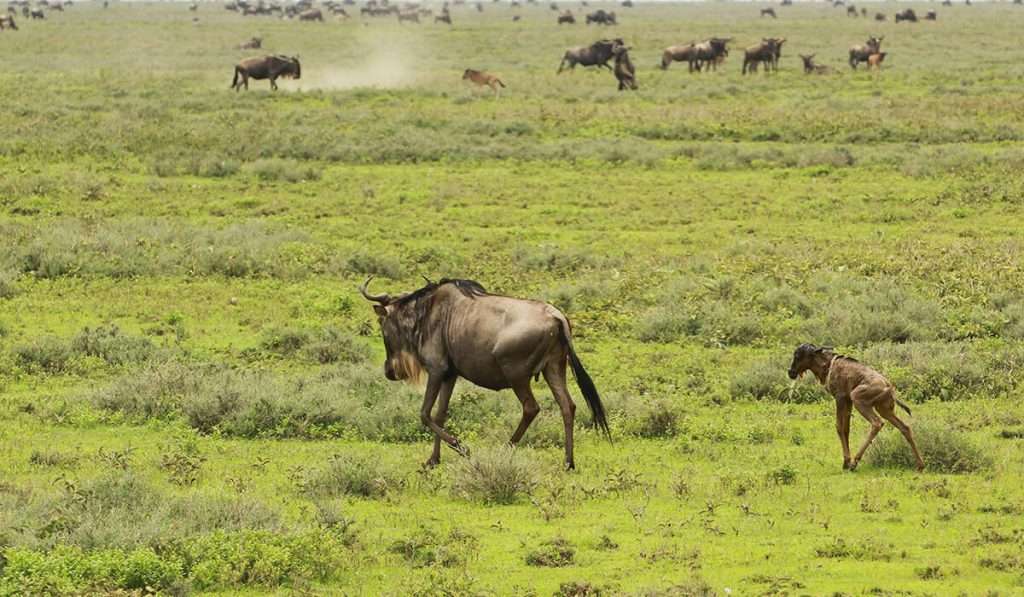
Who doesn’t love the playful antics and innocent eyes of baby animals? Hit the Southern Serengeti in Tanzania for the perfect starting point of this heartwarming wildlife story. As autumn leaves fall from Central Serengeti, herds migrate towards up-and-coming venues – Ndutu and the Ngorongoro Conservation Area. That’s where the magical baby boom begins! By January’s arrival, the rain has taken its bow, leaving a lush green stage behind. Herbivores, including wildebeests, are tempted by this green feast. While munching on the fresh grass around Lake Ndutu the wildebeest ladies gear up for motherhood.
Hold onto your safari hats because late January to March is nothing short of a wildlife maternity ward! Approximately 8,000 wee wildebeests make their big debut daily, amounting to half a million cuties! What’s more fascinating is their resilience. In just 10 minutes post-birth, these little champions are up on their feet, ready to march with the grand herd. Now, this attracts some unwanted attention. The predators are on high alert, eyeing the newborns. Are you longing to be a part of this beautiful spectacle? There isn’t a better time than this to slot a Great Migration safari in Tanzania onto your travel itinerary.
April to May: The Herds Move from Ndutu to Central Serengeti
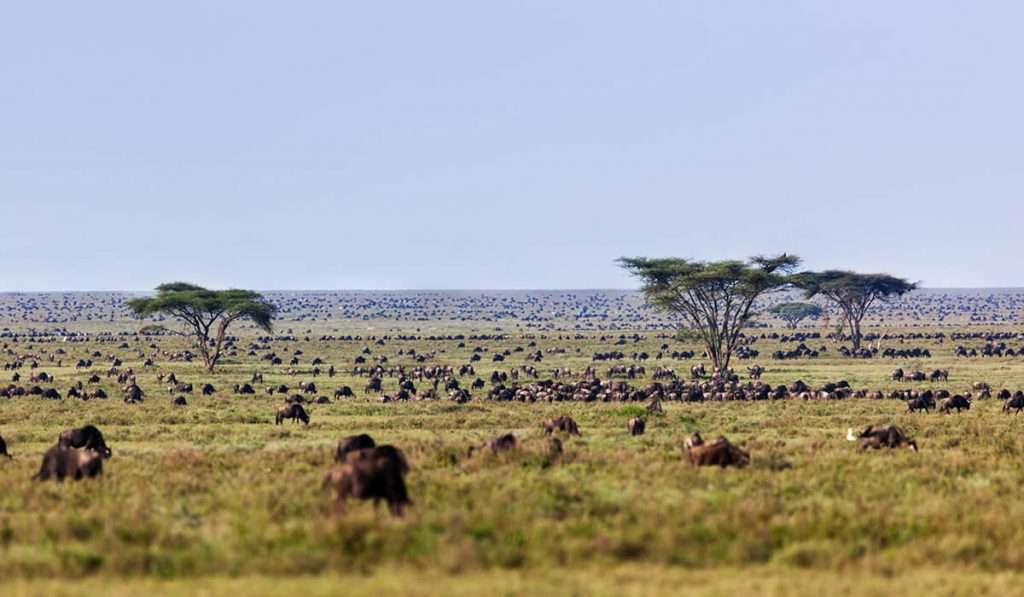
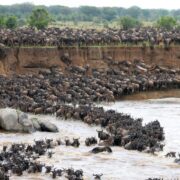
Picture a barren Southern Serengeti. Got it? Enter the resilient wildebeest herds, ready for their next audacious journey. Like adventurers answering the call, they pack up at the first rumble of thunder and head towards the vibrant Central Serengeti. Want to get in on the action? Plan a safari between April and May. You’ll see not just a few but massive herds moving through Moru Kopjes towards the Western Corridor. It’s a sight to behold as thousands of beasts huddle on the banks of the Mbalageti and Grumeti rivers. But it’s not a picnic for the wildebeest. Oh no, it’s a tricky cross-river journey made more daunting with the crafty crocodiles and stealthy predators lurking around. Talk about retention of suspense, right?
June: The Grumeti River Crossing Begins in the Western Serengeti
Are you ready for an adrenaline rush? In June, the stage is set for the high-octane drama of the Great Migration to commence. Sure, the Grumeti and Mbalageti river crossings might not be as nerve-wracking as the ones up north, but it’s anything but dull! The murky river water is teeming with crocodiles ready for their next feast. As the wildebeests muster courage and attempt their daring crossing, the jaws of fate, quite literally, snap at their heels. Meanwhile, the males, high on testosterone, kickstart the heated rutting season. This shoulder season offers the perfect blend of riveting migration action, fewer crowds in the Northern Serengeti, and a steal deal on safari packages.
July to August: The Great Migration Northern Serengeti River Crossing

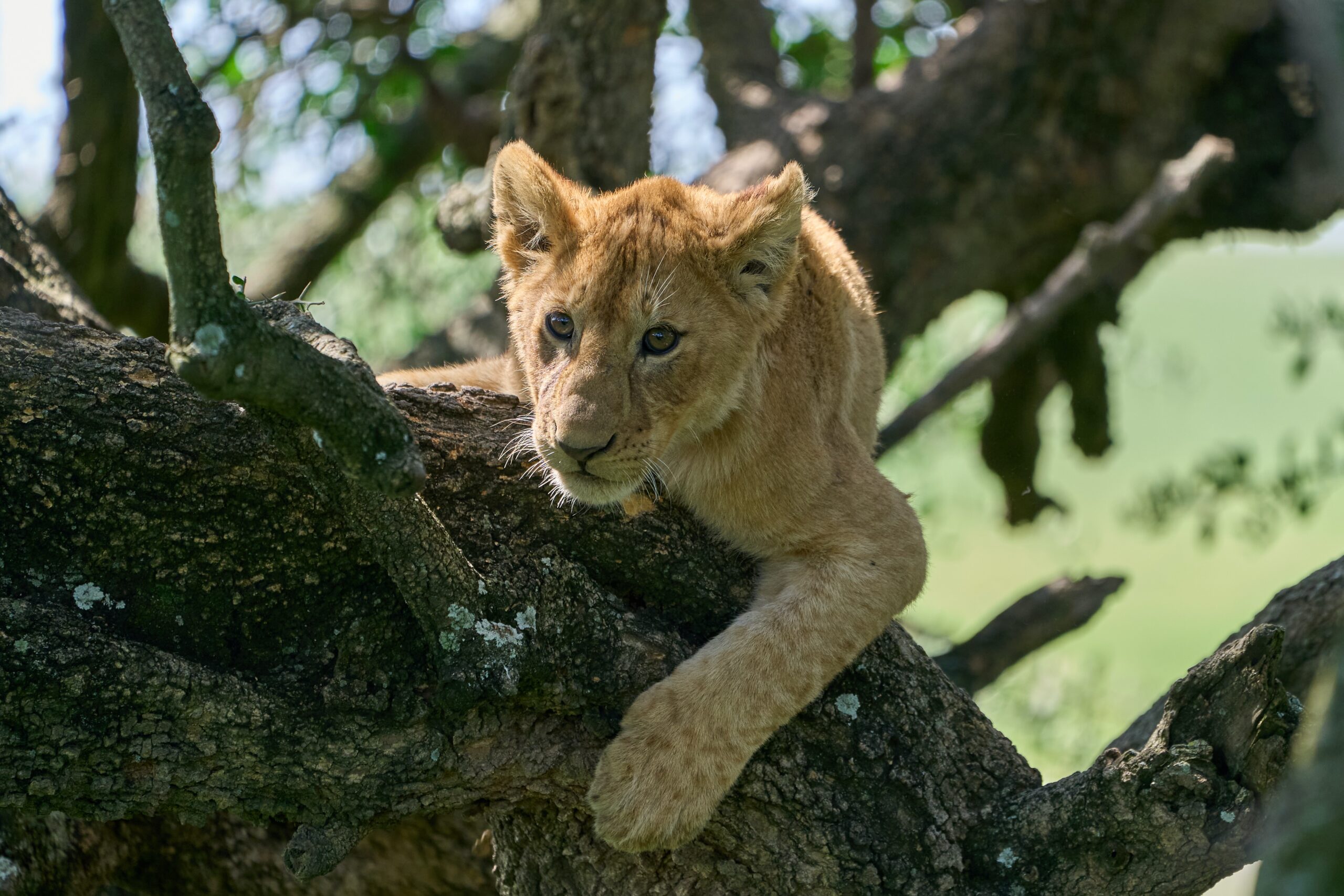
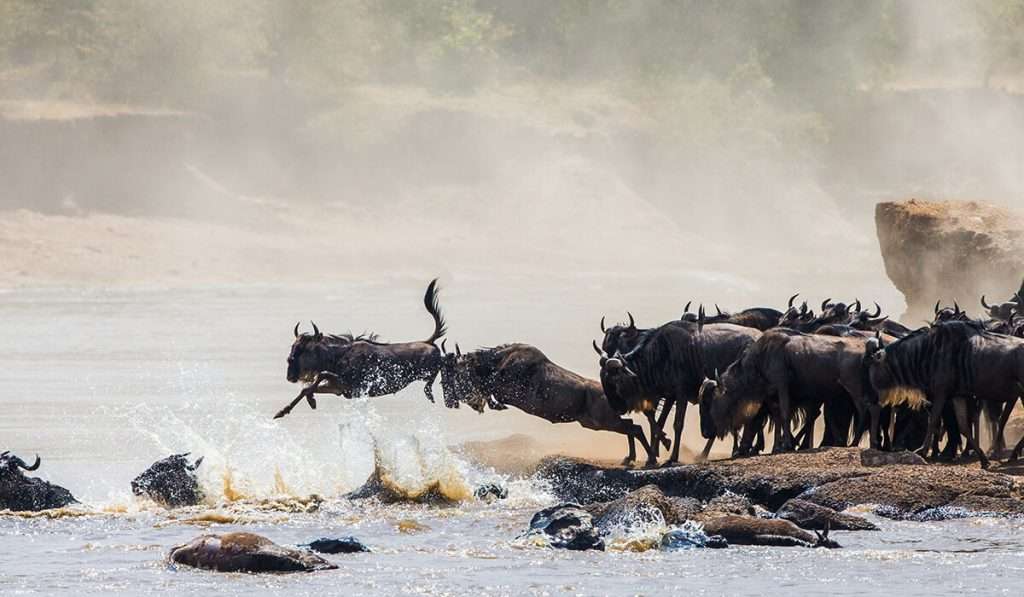
On the hunt for the ultimate Great Migration adventure? Look no further! After the wildebeest herds shift gears and trek from the majestic west to the Northern Serengeti. They then make their way into the enchanting Kenyan landscapes of Maasai Mara. Fasten your seatbelt because the drama gets bolder! Risks spike as the animals brave the ferocious Mara River. Picture this – Nile crocodiles lurking beneath the water, ready to snap their jaws at the challengers. On the other bank, lions lock their gaze, preparing to strike quickly. And the action isn’t confined to the ground. Look up! Marabou storks and vultures circle amid the blue skies, eyeing the bounty below. They’re all set to dive for the feast laid out by nature’s unfortunate casualties. Is the game viewing out here? Spine-tingling, fiery, and oh-so-captivating! With such riveting encounters unfolding, it’s no surprise that this marks Tanzania’s peak season. So, a savvy traveller’s tip? Secure your flight tickets, lock down your lodgings, and grab your Great Migration safari slots early. Get in before the wave hits – because it’s a full house out there during this season!
September to October: Masai Mara and Northern Serengeti
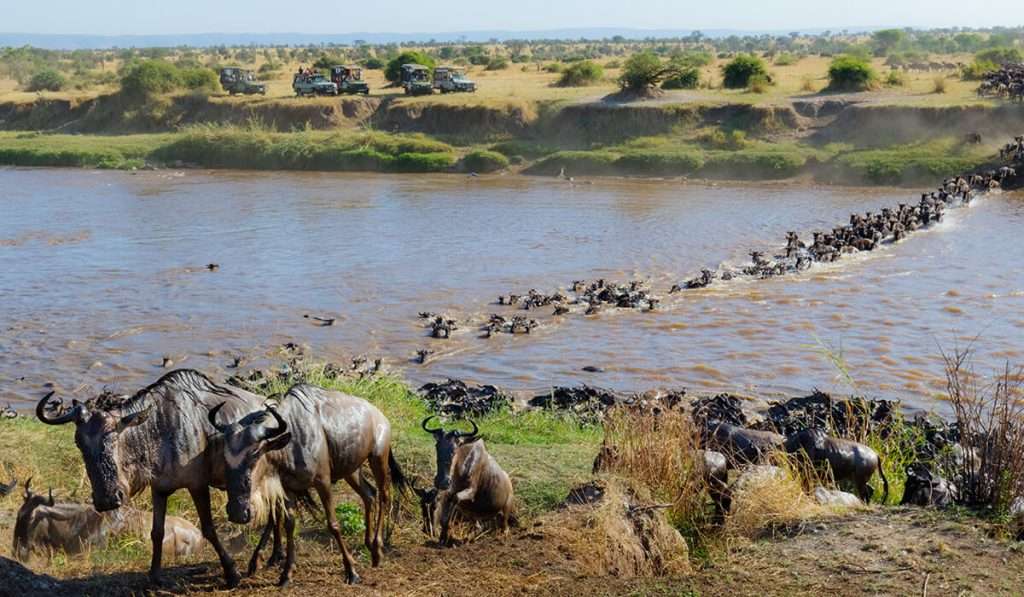
Who said the excitement ends after the jaw-dropping Mara River crossing? The herds may gather their resolve and plunge into Kenya’s mystical Masai Mara, but the drama in your Tanzanian safari is far from over! The Serengeti hosts its fair share of steady-stride wanderers during this period. A smattering of animals stick to the Northern expanses, their eyes on fresh, tender grass. You’ll be treated to fascinating snapshots of life in the wild: animals grazing freely across the vast plains, braving the river cross yet again, and evading quick-footed predators while trying to grab a meal! Then comes October’s first or second week. The call of the Central Serengeti proves too alluring for the herds lounging in Kenya – they make their way back home. This journey back from Northern Serengeti to its Central region is poetic.
November: Central to Southern Serengeti Migration
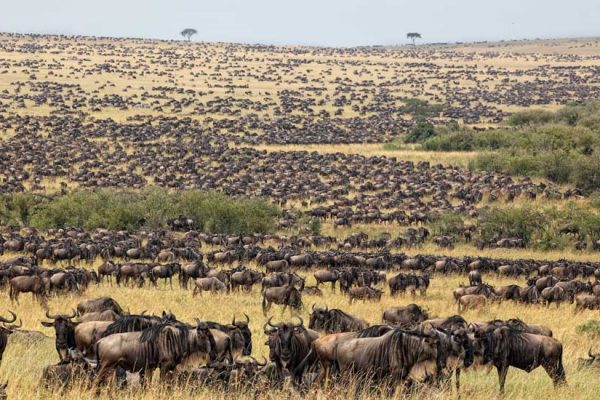
When the adventurous herds find their way back home, guess what? The breathtaking cycle of life kicks off once again! This time, they pack their things and head south from the north, drawn by the lure of fresh, untrod grasses across the southern plains. Are you keen on tapping into the magnificence of this migration? Why not schedule a safari with action in the central Serengeti and tranquil Seronera Valley? These areas offer a quiet contrast to the bustling northern regions. It’s your chance to witness predator hotspots without elbowing through
How to Experience the Great Migration
Guided Safari Packages
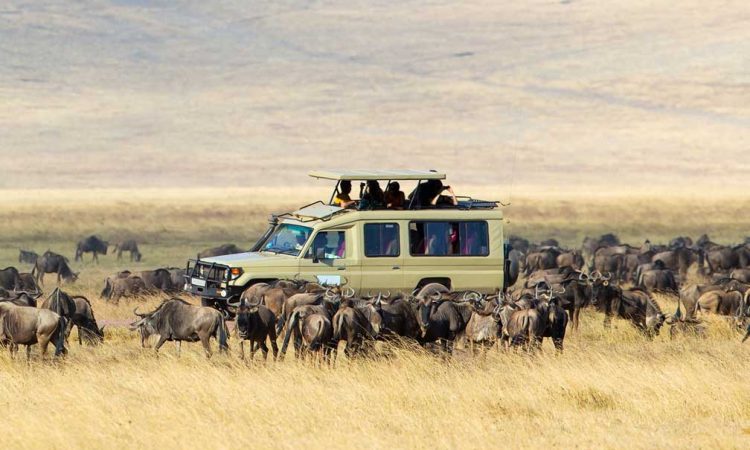
Opt for a comprehensive guided safari to make the most of your visit.
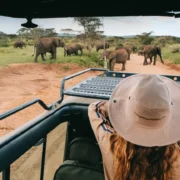
Have you ever considered hopping on a guided safari tour to explore Serengeti? It’s, hands down, the best way to witness the remarkable Great Migration herds!
There’s a wide range of packages tailored just for you! From pocket-friendly tented camps to five-star luxe lodges in Tanzania, find your perfect match.
Plus, you’ll get a professional safari guide and a vehicle to sit back, chill, and truly soak in each moment. Now let’s get into the perks of choosing a guided safari:
– It’s a comprehensive package, including accommodation, park fees, transfers, and thrilling game drives.
– Skilled guides at your service – they master the park’s geography and know the crowd-favourite spots for the herds.
– It’s a time-saver! No need to sweat the small stuff; leave that to us and get ready for an unforgettable experience! – Isn’t that fantastic? Save your energy for the awe-inspiring sights.
Hot Air Balloon Safari
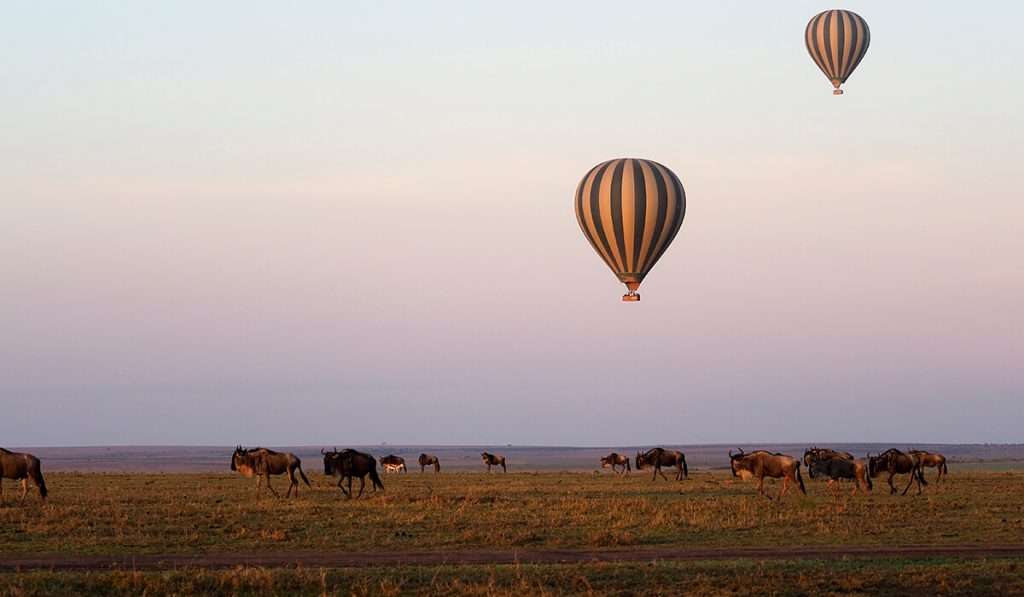
We are looking for an extraordinary experience that’ll leave you speechless for years to come. Try the hot air balloon safari over Serengeti!
Imagine soaring through the sky, watching the sun slowly awaken the breathtaking landscape below. As you silently float past, witness the mesmerizing herds of wildebeest and other magnificent wildlife in their native habitat.
It’s a one-of-a-kind opportunity to marvel at the Great Migration’s vastness and catch a spellbinding bird’s-eye view of the boundless Serengeti and its wandering herds.
Ready to create some unforgettable memories? Book your hot air balloon safari now!
Book Your Great Migration Safari
Ready to start planning your Tanzania adventure? Our safari experts are here to help! Whether you have questions or are eager to book, we’ll curate an experience tailored to your budget and preferences. Witness the annual wildebeest migration and create lifelong memories with our expertly guided safaris.
Frequently Asked Questions (FAQs)
- What months are the Great Migration?
The prime time to witness river crossings is from July to October. Despite this, the Serengeti offers year-round viewing of herds.
Wildlife enthusiasts can enjoy observing these animals anytime. Plan your visit accordingly to experience the remarkable migratory patterns.
- When is the best time to see the Great Migration in Tanzania?
The period from July to October is ideal for witnessing the Great Migration. This is when herds make the perilous journey across the Mara River.
The spectacle creates an intensely thrilling safari experience. It is heightened by the imminent danger from predators on both land and in the water.
- When is calving season?
The calving season of the Great Migration occurs at the start of the year. Specifically, it begins in late January and extends until March.
During this time, thousands of baby wildebeests are born. It provides a unique chance to witness the circle of life amidst the migratory journey.
- What month is best to see the dramatic river crossing?
July and August are ideal months for watching the Mara River crossing. The herds make their formidable crossing during these months.
From September to October, they tend to cross back and forth. After this, the herds migrate towards the Central and Southern Serengeti.
- What is the Great Wildebeest Migration?
The Great Wildebeest Migration is an annual occasion where over 1.5 million wildebeest, accompanied by large numbers of zebra and gazelle, traverse the Serengeti and Masai Mara ecosystems. Rainfall patterns guide this migration as the animals pursue fresh pastures for grazing.
The migration has become a significant attraction, bringing visitors from all around the world. Witnessing this phenomenon up close is a unique and memorable experience for wildlife enthusiasts.
- Why do such large numbers of animals migrate?
The search for greener pastures drives the Great Wildebeest Migration. In response to the region’s rainfall and seasonal changes, the herds continuously move in search of nutritious grass for grazing.
This movement is essential for wildebeest, zebra, and gazelle to sustain themselves and provide for their offspring. With the migration, these animals could find enough resources to survive and reproduce.
- Which areas should I visit to witness the Great Migration?
The Serengeti in Tanzania and the Masai Mara in Kenya are the primary areas where you can witness the Great Wildebeest Migration. The northern Serengeti offers the best vantage points to observe the Mara River crossing from July to August.
In southern Serengeti, the calving season takes place from January to March. When planning a trip, it’s essential to consider the migration’s cyclical nature and consult experts to determine the best locations for your visit.
- Are there risks associated with travelling during the Great Migration?
Travelling during the Great Migration is generally relatively safe, especially when accompanied by experienced guides. However, some risks can come from weather-related issues, such as flooding or unfavorable road conditions.
Additionally, it’s essential to follow safety guidelines while on safari to avoid any wildlife-related incidents. Travel insurance is highly recommended when planning a trip during the migration season.
- How can a traveller ensure they have the best possible Great Migration experience?
To maximize the Great Migration experience, book a guided safari with reputable operators knowledgeable about the area and the animals’ movement patterns. Plan your visit according to the season and the specific migration events you want to witness.
Additionally, it helps to consult expert advice on the best accommodations and locations to view the migration. Lastly, always follow your guides’ guidelines and rules, as they ensure your safety and enjoyment.
Ready for an unforgettable adventure? Speak to our safari experts today to turn your travel dreams into reality!